- LOGIN
- MemberShip
- 2026-09-17 21:25:42
- China-made new drugs actively enter the global market
- by Son, Hyung Min | translator Hong, Ji Yeon | 2025-01-16 06:13:06
Many Chinese pharmaceutical and biotech companies are demonstrating results from their new anti-cancer drug development in the global market.
Companies like Jiangsu Hengrui Pharmaceuticals and BeiGene have obtained approvals for their immunotherapy and targeted anti-cancer agents from the regulatory authorities globally, including South Korea, the United States, and Europe.
The gap between Chinese and Korean pharmaceutical and biotech companies has increased as Chinese companies succeeded in commercialization and Phase 3 clinical trial entries.
It has been reported that most new anti-cancer drugs from Korean pharmaceutical and biotech companies remain in the preclinical stages or phase 1 clinical trials.
Two immunotherapy drugs have been commercialized in the U.S….bispecific antibodies have entered phase 3 trials
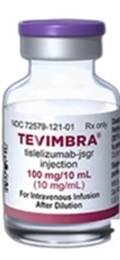
Following the approval, Tevimbra became the third immunotherapy following MSD's Keytruda and BMS·Ono Pharmaceutical's Opdivo to be used as a first-line treatment for HER2-positive gastric cancer.
In November 2023, Tevimbra received domestic approval as a monotherapy for the treatment of adult patients with unresectable, recurrent, locally advanced, or metastatic esophageal squamous cell carcinoma who are unable to continue platinum-based chemotherapy or have experienced recurrence or progression following such treatment.
BeiGene has started over 17 clinical trials for potential indications for Tevimbra.
The company has already confirmed positive results from 11 phase 3 trials and 4 phase 2 trials.
To date, over 900,000 patients have been treated with Tevimbra.
Tevimbra obtained approvals from over 40 countries worldwide.
Chinese pharmaceutical companies had previously failed to obtain approvals from global regulatory authorities when only enrolling Chinese patients.
Now, these companies are overcoming the approval hurdles by enrolling patient groups of various ethnicities and genders.
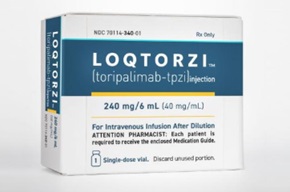
Loqtorzi has been approved as the first-line treatment in combination with platinum-based chemotherapy for the treatment of metastatic or locally advanced nasopharyngeal carcinoma (NPC).
Junshi Biosciences entered into an out-licensing deal with the US-based Coherus BioSciences for Loqtorzi with an upfront payment of US$ 150 million, totaling US$ 1.1 billion (approximately KRW 1.6 trillion).
Jiangsu Hengrui Pharmaceuticals aims to receive approval for its camrelizumab in combination with the HLB group's targeted anti-cancer, Rivoceranib.
In May 2024, Jiangsu Hengrui Pharmaceuticals and HLB received a Complete Response Letter (CPL) from the FDA but received a decision of 'not required to take additional actions' during the site monitoring.
The combination therapy containing Rivoceranib and Jiangsu Hengrui Pharmaceuticals' immunotherapy, camrelizumab, demonstrated the longest survival extension benefit as the first-line treatment for liver cancer.
China's Innovant is knocking on the door of the FDA in collaboration with the global pharmaceutical company Eli Lily.
Following obtaining approval for the immunotherapy sintilimab in China, Innovant signed an out-licensing agreement with Eli Lily in 2015 worth US$ 1 billion (approximately KRW 1.3375 trillion).
Both companies applied for approval of sintilimab for the treatment of non-small cell lung cancer (NSCLC) but failed to obtain the FDA approval.
Lily and Innovant plan to conduct multi-regional clinical trials comparing sintilimab+chemotherapy to the existing standard therapy as requested by the FDA.
Chinese pharmaceutical companies are showing results in bispecific antibodies.
Last year, the PD-1/VEGF bispecific antibody ivonescimab demonstrated superior effects than Keytruda.
Based on a Phase 3 clinical trial involving 398 patients with PD-L1-positive NSCLC, ivonescimab reduced the tumor progression risk by 49% than Keytruda.
Ivonescimab is a bispecific antibody developed by China's Akeso, and Akeso signed a partnership agreement with the US-based Summit Therapeutics.
Summit Therapeutics has the right to develop ivonescimab in the U.S., Canada, Europe, Japan, and Latin America.
Akeso is developing AK112, a new drug candidate, in China and Australia.
Chinese biotech company SystImmune is developing 'BL-B01D1,' targeting EGFR and HER3, which are commonly found in solid cancers.
The company has confirmed the efficacy and safety in clinical trials and out-licensed the candidate to BMS for US$ 8.4 billion (KRW 11.7 billion).
Korean companies' candidates are in the early phases of clinical trials…increasing gap between China Chinese companies have successfully commercialized their immunotherapies and bispecific antibodies.
However, Korean pharmaceutical and biotech industry candidate products are still in the early phases of clinical trials.
TiumBio is conducting a Phase 2ab trial of its immunotherapy candidate TU2218.
TU2218 blocks pathways of transforming growth factor beta (TGF-ß) and vascular endothelial growth factor (VEGF), which are known to hinder cancer immunotherapy activation.
In a Phase 1a trial, TU2218 treatment reduced the blood concentration of major biomarkers of connective tissue growth factor (CTGF), whose expression is known to be regulated by TGF-ß.
After seven days, CTGF blood concentration decreased by 27% on average compared to baseline levels.
Currently, in addition to the TU2218 monotherapy, TiumBio is also conducting clinical trials for a combination therapy that includes Keytruda.
GI Innovation recently modified its Phase ½ clinical trials in the United States studying immunotherapy candidate 'GI-102' to confirm its combination with Enhertu.
GI-102, which acts on CD80 and interleukin (IL)-2.
IL-2 is involved in immune cell proliferation and activation, and CD80 blocks CTLA-4, a receptor preventing immune cells from attacking cancer cells.
GI-102 is being developed as intravenous (IV) and subcutaneous (SC) formulations.
GI-102 demonstrated potential in a monotherapy clinical trial.
According to Phase 1/2a clinical trial data presented by the company, Skin melanoma patients treated with GI-102 had an objective response rate (ORR) of 43%.
Under GI-102 treatment, lymphocyte proliferation was found, and there has been no significant drug toxicity regarding the safety profile.
ImmuneOnsia confirmed the drug safety profile of its immunotherapy candidate, IMC-002, is a dose-escalation Phase 1a trial.
IMC-002 works by blocking the signal between CD47 of cancer cells and macrophages.
The company monitored the effect of IMC-002 in 12 patients, and there was no drug toxicity in each dosage.
Six out of 12 patients had steady disease (SD).
The company plans to determine the recommended dosage for the phase 2 trial based on the results from the phase 1 trials.
ABL Bio has started a phase 1 trial to evaluate the efficacy and safety of its immunotherapy candidate ABL103 in patients with advanced·metastatic solid cancer.
The company aims to evaluate the safety and tolerability of ABL103 monotherapy and determine the recommended dosage and maximum tolerated dose for a subsequent phase 2 clinical trial.
The phase 1 trial will be conducted in both South Korea and the United States.
In preclinical studies, ABL103 demonstrated to induce 4-1BB activation in tumor microenvironments expressing B7-H4.
Additionally, it showed complete eradication of cancer cells and the suppression of recurrence in homologous cancer cells.
Pharmaceutical personnel said, "New drug candidate discovery capacity of Korean companies is at the global level.
However, they have difficulty entering a later phase of clinical trials.
To secure global approval, these companies need to conduct multi-national clinical trials and clinical trials across numerous sites.
Therefore, raising the funds can be difficult." "Companies must demonstrate the benefits of new drug candidates and how to address their weaknesses in clinical trials.
They should identify unmet needs in clinical practices before conducting trials and set goals for the development of new drugs based on intended purpose," he added.
-

- 0
댓글 운영방식은
댓글은 실명게재와 익명게재 방식이 있으며, 실명은 이름과 아이디가 노출됩니다. 익명은 필명으로 등록 가능하며, 대댓글은 익명으로 등록 가능합니다.
댓글 노출방식은
댓글 명예자문위원(팜-코니언-필기모양 아이콘)으로 위촉된 데일리팜 회원의 댓글은 ‘게시판형 보기’와 ’펼쳐보기형’ 리스트에서 항상 최상단에 노출됩니다. 새로운 댓글을 올리는 일반회원은 ‘게시판형’과 ‘펼쳐보기형’ 모두 팜코니언 회원이 쓴 댓글의 하단에 실시간 노출됩니다.
댓글의 삭제 기준은
다음의 경우 사전 통보없이 삭제하고 아이디 이용정지 또는 영구 가입제한이 될 수도 있습니다.
-
저작권·인격권 등 타인의 권리를 침해하는 경우
상용 프로그램의 등록과 게재, 배포를 안내하는 게시물
타인 또는 제3자의 저작권 및 기타 권리를 침해한 내용을 담은 게시물
-
근거 없는 비방·명예를 훼손하는 게시물
특정 이용자 및 개인에 대한 인신 공격적인 내용의 글 및 직접적인 욕설이 사용된 경우
특정 지역 및 종교간의 감정대립을 조장하는 내용
사실 확인이 안된 소문을 유포 시키는 경우
욕설과 비어, 속어를 담은 내용
정당법 및 공직선거법, 관계 법령에 저촉되는 경우(선관위 요청 시 즉시 삭제)
특정 지역이나 단체를 비하하는 경우
특정인의 명예를 훼손하여 해당인이 삭제를 요청하는 경우
특정인의 개인정보(주민등록번호, 전화, 상세주소 등)를 무단으로 게시하는 경우
타인의 ID 혹은 닉네임을 도용하는 경우
-
게시판 특성상 제한되는 내용
서비스 주제와 맞지 않는 내용의 글을 게재한 경우
동일 내용의 연속 게재 및 여러 기사에 중복 게재한 경우
부분적으로 변경하여 반복 게재하는 경우도 포함
제목과 관련 없는 내용의 게시물, 제목과 본문이 무관한 경우
돈벌기 및 직·간접 상업적 목적의 내용이 포함된 게시물
게시물 읽기 유도 등을 위해 내용과 무관한 제목을 사용한 경우
-
수사기관 등의 공식적인 요청이 있는 경우
-
기타사항
각 서비스의 필요성에 따라 미리 공지한 경우
기타 법률에 저촉되는 정보 게재를 목적으로 할 경우
기타 원만한 운영을 위해 운영자가 필요하다고 판단되는 내용
-
사실 관계 확인 후 삭제
저작권자로부터 허락받지 않은 내용을 무단 게재, 복제, 배포하는 경우
타인의 초상권을 침해하거나 개인정보를 유출하는 경우
당사에 제공한 이용자의 정보가 허위인 경우 (타인의 ID, 비밀번호 도용 등)
※이상의 내용중 일부 사항에 적용될 경우 이용약관 및 관련 법률에 의해 제재를 받으실 수도 있으며, 민·형사상 처벌을 받을 수도 있습니다.
※위에 명시되지 않은 내용이더라도 불법적인 내용으로 판단되거나 데일리팜 서비스에 바람직하지 않다고 판단되는 경우는 선 조치 이후 본 관리 기준을 수정 공시하겠습니다.
※기타 문의 사항은 데일리팜 운영자에게 연락주십시오. 메일 주소는 dailypharm@dailypharm.com입니다.


-
- "Leclaza, the best first-line option…expanded reimb will increase accessibility"
- PALOMA-2 recorded an objective response rate (ORR) of 90 and the 3-year overall survival (OS) rate of 70%…mOS has not yet been reached